Feelings identification toys can make it easier for young children to recognize emotions, name what they feel, and practice calming skills in a low-pressure way.
Whether you’re shopping for a classroom, therapy space, or home calm-down corner, the best options for 2026 balance engagement, durability, and age-appropriate social-emotional learning support.
Best 10 Feelings Identification Toys Picks for 2026
Emotion Check-In Bottles
Express Your Feelings Sensory Bottles

- Four bottled emotions: Excited, Impatient, Lonely, Nervous
- Quiet, easy-grip, mess-free sensory design
- Works for SEL, mindfulness, and therapy use
Best For: Kids who need a calm, visual way to identify and talk about big feelings
Matching Emotions Cards
Feelings & Emotions Puzzle Cards

- 24 double-sided puzzle cards for emotion matching
- One-correct-match shapes add a problem-solving element
- Colorful, durable cards for repeated SEL use
Best For: Young children practicing emotion recognition through a hands-on matching activity
Tantrum Calm Kit
Big Little Feelings Calm Down Kit

- Includes toy, book, plush, and parenting tips
- Designed for toddler social-emotional learning
- Supports tantrum calming and coping practice
Best For: Parents of toddlers who want a guided calm-down kit with emotional learning tools
Emotion Strategy Flip Book
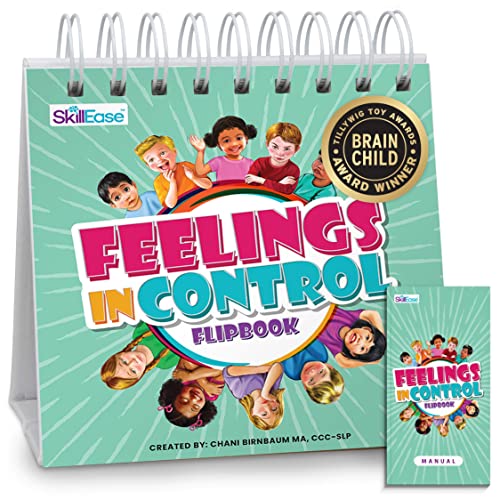
- 20 laminated emotion pages with coping strategies
- Includes a handbook for clearer explanation
- Useful for vocabulary, self-regulation, and social skills
Best For: Kids who need a structured visual guide for naming feelings and choosing coping strategies
Feelings-Focused Classroom Set
Learning Resources All About Me Feelings Activity Set

- 36 figurines cover 6 core emotions.
- Includes 18 photo-based activity cards.
- Box becomes a mini-theater stage.
Best For: Preschoolers learning emotion recognition through guided play.
Change-It-Up Emotion Game
Who's Feeling What? Social Emotional Learning Game
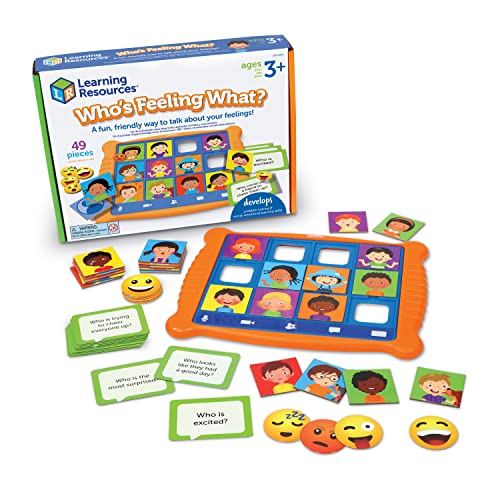
- 12 double-sided caller cards add replay value.
- Teaches emotion recognition through matching play.
- Includes an SEL activity guide for adults.
Best For: Age 3+ kids practicing emotion matching in a game format.
Calm-Down Visual Guide
Thought-Spot I Know What to Do Flipbook
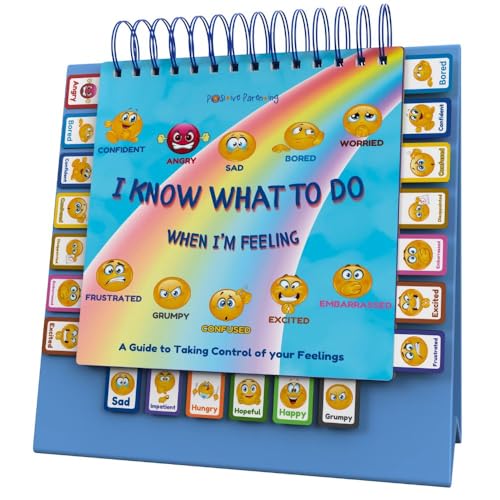
- Covers 20 common moods with coping ideas.
- Large tabs help kids find feelings fast.
- Durable laminated pages suit daily use.
Best For: Children who need visual emotion support and coping prompts.
Emotion Learning Fidget Set

- 6 emotion faces for SEL practice
- Soft, quiet rubber fidgets
- Also teaches shapes and colors
Best For: Toddlers and preschoolers learning emotions through tactile play
Quiet Emotion Bottles
hand2mind Express Your Feelings Sensory Bottles

- 4 sealed bottles for emotion matching
- Quiet, mess-free sensory play
- Good for SEL and calming corners
Best For: Classrooms, counseling, and calm-down spaces
Tactile Emotion Blocks
Silicone Feeling Toys for Kids

- 6 textured silicone emotion blocks
- Safe for light chewing
- Useful for nonverbal and SEL support
Best For: Preschoolers and special needs kids needing tactile emotion practice
Emotion Check-In Bottles – Express Your Feelings Sensory Bottles
If you want feelings identification toys that make big emotions easier to talk about, these sensory bottles give children a simple visual cue to start the conversation. Each bottle represents a secondary emotion—Excited, Impatient, Lonely, or Nervous—with motion, color, and a facial expression that helps make feelings more concrete during mindful breaks or counseling.
Best For: Calm-down corners, classroom SEL routines, and therapy sessions where kids need a quiet way to name and manage emotions.
Pros:
- Four emotion bottles cover Excited, Impatient, Lonely, and Nervous.
- Quiet, easy-grip design works well for independent use.
- Mess-free and securely sealed for frequent handling.
- Supports mindfulness, play therapy, and classroom emotional check-ins.
Cons:
- Focuses on only four secondary emotions.
- Best used with adult guidance for deeper coping discussions.
Overall, this is a practical pick for turning emotion vocabulary into a hands-on routine. It is especially useful when you need a low-noise option that helps children observe, name, and settle their feelings.
Matching Emotions Cards – Feelings & Emotions Puzzle Cards
These feelings identification toys use matching puzzles to help kids connect emotions with real-life images. The one-correct-match design makes the activity straightforward, while the colorful illustrations keep preschoolers engaged during home, classroom, or homeschool SEL practice.
Best For: Preschoolers and young kids learning emotional awareness through a simple matching game.
Pros:
- Helps children practice matching feelings to images.
- Unique puzzle shapes add a built-in problem-solving challenge.
- Bright illustrations are designed to hold attention.
- Durable cardboard pieces are made for repeated use.
Cons:
- Limited to 24 double-sided puzzles.
- Less open-ended than some other emotion-learning tools.
This set is a solid choice if you want a simple, repeatable way to teach emotions without overcomplicating the activity. It works best as a quick SEL tool for practicing emotional awareness and matching skills.
Tantrum Calm Kit – Big Little Feelings Calm Down Kit
If you’re shopping for feelings identification toys with built-in parent support, this Fisher-Price kit pairs kid-friendly activities with guidance for calming down. It includes a Feelings See ’n Say, a board book, a plush sun stress ball, and digital content aimed at helping adults tame tantrums and teach coping skills.
Best For: Toddlers ages 2+ who need emotional-development toys plus parent tips for calmer routines.
Pros:
- Includes a mix of toy formats: activity toy, book, and plush.
- Comes with access to custom digital parenting content.
- Designed to support social-emotional learning and coping skills.
- Compact set is easy to keep on hand at home.
Cons:
- Requires 2 AA batteries, which are included but still adds a powered component.
- Less focused on open-ended play than some standalone emotion toys.
This kit stands out because it supports both the child and the caregiver. If you want a guided, ready-to-use calm-down set, it offers a practical mix of emotional play and parenting support.
Emotion Strategy Flip Book – Feelings in Control Flip Book
For a more detailed feelings identification toy, this laminated flip book pairs emotion visuals with coping ideas for each feeling. It is built to help children recognize facial expressions, build emotional vocabulary, and practice real-time regulation with strategies that are not repeated across every page.
Best For: Counselors, therapists, and parents who want a structured emotion book for kids with autism or special needs.
Pros:
- Includes 20 emotion pages with bright, multicultural characters.
- Offers specific coping solutions and a separate handbook.
- Can be used for self-regulation, social skills, and vocabulary building.
- Laminated format is suited to repeated use in classrooms or therapy.
Cons:
- More instructional than toy-like.
- Single-book format may be less engaging for children who prefer active play.
This flip book is a strong option when you need emotions explained clearly and consistently. It is especially useful for children who benefit from visual structure and individualized coping prompts.
Feelings-Focused Classroom Set – Learning Resources All About Me Feelings Activity Set
If you want feelings identification toys that do more than name emotions, this set gives kids hands-on ways to sort, match, and talk through feelings. With 36 figurines, 18 activity cards, and a mini-theater playset, it works well for preschool social-emotional learning at home or in the classroom.
Best For: Preschoolers and early learners building emotional vocabulary through matching games, storytelling, and role-play.
Pros:
- Includes 36 colorful figurines representing 6 key emotions.
- Comes with 18 activity cards using real photos of children expressing emotions.
- Storage box converts into a mini-theater stage for interactive play.
- Durable, semi-weighted pieces stand on their own for easier use.
Cons:
- Best suited to guided play rather than open-ended free play alone.
- Designed for children ages 3 and up, so it may be too advanced for younger toddlers.
This is a practical choice if you want a structured emotional learning tool that supports both recognition and expression. The mix of figurines, cards, and playset features makes it easy to turn everyday lessons into repeatable SEL activities.
Change-It-Up Emotion Game – Who's Feeling What? Social Emotional Learning Game
Among feelings identification toys, this game stands out for its replayable card combinations and simple emotion-matching format. It helps kids spot faces, match feelings, and practice social-emotional learning in a way that feels fresh each time you play.
Best For: Kids ages 3+ who learn best through interactive matching games and classroom or home SEL activities.
Pros:
- Uses 12 double-sided caller cards and 12 double-sided emotion prompt cards for varied play.
- Supports emotion recognition and understanding through matching activities.
- Includes an activity guide with ideas for home or classroom use.
- Designed as a two-player manual game with no batteries required.
Cons:
- Only supports 2 players, so it is less flexible for larger groups.
- Gameplay depends on matching and prompt cards rather than open-ended pretend play.
This is a solid pick if you want a simple, teacher-friendly emotion toy that can be used in different ways without feeling repetitive. The flexible card setup makes it easy to adapt for quick practice sessions or more structured SEL lessons.
Calm-Down Visual Guide – Thought-Spot I Know What to Do Flipbook
If you need feelings identification toys that also support coping, this flipbook gives children a clear visual way to name emotions and choose calming strategies. Its tabs, large pages, and simple layouts make it useful for home routines, classrooms, therapy settings, and calm-down corners.
Best For: Young children who need visual support for identifying feelings and practicing coping skills.
Pros:
- Covers 20 common moods with simple coping strategies for each one.
- Large picture tabs make it easy for kids to find the emotion they feel.
- Thick laminated pages and a hard cover are built for frequent use.
- Helpful for children with autism, ADHD, communication delays, or non-verbal needs.
Cons:
- It is a single-user tool, so it is less interactive than game-based options.
- The paper-based format may not appeal to kids who prefer hands-on pieces or figurines.
This flipbook is a strong option when the goal is emotional awareness plus practical regulation, not just naming feelings. It is especially useful for adults who want a durable visual reference they can revisit every day.
Emotion Learning Fidget Set – LESONG Sensory Faces for SEL
These feelings identification toys combine soft textures, bright colors, and six facial expressions to help young children recognize and talk about emotions in a hands-on way. The set is aimed at preschool, daycare, and classroom use, with a quiet design that fits calm-down corners, sensory bins, and everyday fidget play.
Best For: Toddlers, preschoolers, and special needs kids who need a quiet, tactile way to practice emotional vocabulary and shape recognition.
Pros:
- Includes 6 emotion faces tied to social-emotional learning
- Soft rubber build with no sharp edges or sound
- Also teaches shapes and colors with 6 distinct forms
- Useful for home, classroom, road trips, and gift bags
Cons:
- Limited to six emotions and six shapes
- Smaller size may not suit older kids
- Not designed for complex role-play or open-ended building
This is a practical pick if you want a simple, quiet set of feelings identification toys that supports early SEL, sensory play, and calm-down routines without adding classroom noise.
Quiet Emotion Bottles – hand2mind Express Your Feelings Sensory Bottles
For families and classrooms looking for feelings identification toys with a calm, low-distraction format, these sensory bottles give kids a visual and hands-on way to match emotions like happy, angry, scared, and sad. The sealed, easy-grip design is built for repeated use in calm-down corners, SEL lessons, counseling, or mindfulness breaks.
Best For: Young children who benefit from quiet visual fidgets for emotion recognition, calming routines, and guided conversation.
Pros:
- Represents 4 primary emotions with distinct colors and expressions
- Quiet, mess-free, sealed bottles for frequent handling
- Supports SEL lessons, play therapy, and mindful breaks
- Easy-grip format works well for independent use
Cons:
- Only covers four emotions
- Plastic bottle format may feel simple for some kids
- Primarily an indoor, tabletop-style activity
This set stands out if you want feelings identification toys that are especially useful in classrooms or therapy settings where kids need quiet sensory input and clear emotion cues.
Tactile Emotion Blocks – Silicone Feeling Toys for Kids
These feelings identification toys use textured silicone blocks and facial expressions to help children identify emotions and talk through them in a simple, hands-on format. With six emotion options and a quiet tactile design, they fit well in preschool calm-down corners or as support tools for nonverbal and special needs children.
Best For: Kids who need a durable, tactile emotion toy for self-regulation, nonverbal communication, and sensory exploration.
Pros:
- 6 emotion blocks cover sad, happy, angry, naughty, shy, and shock
- Made from food-grade silicone and safe for light chewing
- Textured surfaces support sensory play and focus
- Durable printed faces are designed not to come off easily
Cons:
- Emotion set includes some less common labels
- No batteries or interactive features beyond tactile play
- Block style may be less engaging than moving or liquid toys
If you want feelings identification toys that are durable, quiet, and easy to use in early learning or special needs settings, this silicone set offers a straightforward tactile option.
How We Picked These Feelings Identification Toys
We looked for toys and learning tools that help children identify emotions through visual cues, hands-on play, and simple guided activities. Priority went to options that are useful for toddlers, preschoolers, and early elementary kids, with special attention to classroom-friendly durability, calm-down use, and support for social-emotional learning.
We also favored products that can work in more than one setting. The strongest Feelings Identification Toys are flexible enough for home routines, counseling sessions, therapy play, and classroom centers.
Quick Comparison: Which Type Works Best?
Visual tools like charts, flipbooks, and puzzle cards are best for teaching emotion names and matching faces or situations. Sensory bottles and fidgets are better when a child needs to calm their body before talking about feelings. Activity sets and games are useful when you want practice with turn-taking, communication, and broader SEL skills.
If you need something for nonverbal children or early learners, choose products with clear images, textures, or repeated routines rather than language-heavy prompts.
Key Buying Factors for Feelings Identification Toys
Age and Developmental Stage
Match the toy to the child’s attention span and reading level. Toddlers usually do better with simple visual and sensory tools, while older preschoolers can handle emotion charts, matching games, and step-by-step regulation activities.
Emotional Learning Goal
Decide whether your main goal is emotion naming, calming, communication, or self-regulation. The best Feelings Identification Toys often do one thing especially well instead of trying to cover everything.
Usability in Real Settings
For classrooms and calm-down corners, choose materials that are sturdy, easy to reset, and simple for kids to use independently. For home use, look for tools that fit into daily routines and can be revisited often.
Accessibility and Inclusivity
Children with autism, speech delays, or sensory needs may benefit from tactile pieces, visual supports, and predictable formats. Clear imagery and minimal clutter can make a big difference.
Who Should Buy Which Feelings Identification Toys?
Parents who want a simple at-home starter may prefer a small visual or sensory tool. Teachers often need a set that works for group lessons and independent use. Therapists and special-education teams may want more structured emotion-learning systems, especially for children who need repeated practice with identifying and expressing feelings.
If you’re unsure, start with a versatile option that combines visuals and calming features. That gives you the most flexibility as your child’s needs change.