Finding the right conversation card game for autistic children can make it easier to start low-pressure talks, practice turn-taking, and build confidence in a way that feels natural.
Below, we focus on card decks that are clear, engaging, and flexible enough for home, school, therapy, and travel.
Best 10 Conversation Card Game for Autistic Children Picks for 2026
Open-Ended Talk Deck
Autism Conversation Cards for Kids
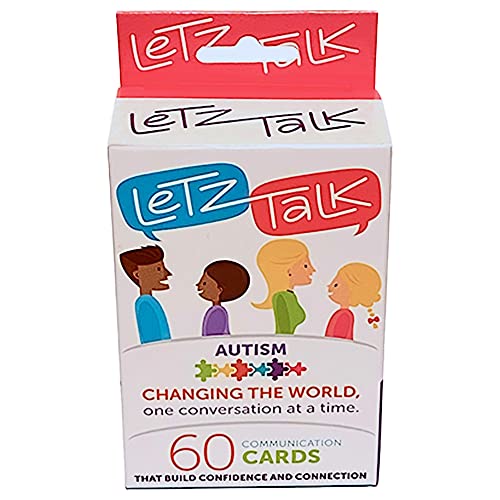
- 60 thought-provoking questions
- Open-ended prompts, not yes/no
- Works for home, school, or therapy
Best For: Adults who want an icebreaker deck to support social and emotional conversation
Visual Scene Prompt Cards
Illustrated Conversation Cards for Kids

- 80 scene-based illustrated cards
- Backs include Who/What/Where/Why/How
- Built for social skills and emotional intelligence
Best For: Kids who learn best through visual scenarios and guided discussion
Large-Format Conversation Deck

- 200 prompts across 5 kid-focused categories
- Developed with speech and therapy experts
- Includes guidance cards for adults
Best For: Families and professionals who want a structured, high-variety conversation tool
Animal Scenario Learning Cards
Who What Why Conversation Cards

- 60 illustrated real-life scenarios
- Animal characters keep prompts friendly
- Supports empathy and critical thinking
Best For: Adults who want a visual, speech-friendly conversation tool for kids
Portable Dinner Table Chat Starter

- 40 kid-friendly question cards
- Portable box for travel or home use
- Supports communication and family chat
Best For: Families wanting a compact, easy conversation starter
Safety Scenario Think-and-Talk Deck
Who What Why Emergency & Safety

- 60 safety and emergency scenario cards
- Guided prompts for decision-making
- Animal characters keep topics approachable
Best For: Kids who need structured practice with safety and communication
Big Question Mix for Families and Classrooms
400 Kids and Teens Conversation Cards

- 200 cards with 400 total questions
- Includes kid and teen question sets
- Useful for home, school, and family talk
Best For: Mixed-age groups needing a large, flexible prompt library
Therapy-Friendly Starter Deck
Conversation Cards for Kids 9-12

- 60 open-ended prompts for ages 9-12
- Supports social-emotional learning and confidence
- Useful for home, school, and therapy settings
Best For: Older kids and preteens who need structured, open-ended conversation starters
All-Purpose Family Talk Deck
Little Talk Conversation Cards

- 170 open-ended prompts for ages 4-12+
- Travel-friendly for road trips and screen-free time
- Supports ADHD, therapy, and social-emotional learning
Best For: Families and professionals who want a big, flexible conversation deck
Picture-Based Therapy Pack

- 120 picture cards with wh-questions
- Covers feelings, safety, inclusion, and logic
- Designed for speech therapy and counseling use
Best For: Kids ages 4+ who benefit from visual prompts and guided discussion
Open-Ended Talk Deck – Autism Conversation Cards for Kids
If you are looking for a conversation card game for autistic children, this deck focuses on open-ended questions that help kids share thoughts, feelings, and opinions instead of giving one-word answers. The 60-card set is built around social-emotional learning and can be used at home, in classrooms, or during therapy sessions.
Best For: Families, teachers, therapists, and counselors who want a simple icebreaker tool for social and emotional conversations.
Pros:
- 60 age-appropriate, thought-provoking questions
- Open-ended prompts that encourage more than yes-or-no answers
- Useful for home, school, writing prompts, and therapy sessions
- Designed to support confidence and social skills
Cons:
- Best suited to guided conversation, not solo play
- Age range is broad, so some questions may need adult support
Overall, this is a practical pick if you want a straightforward card deck that helps children practice communicating in a low-pressure way. Its strengths are the open-ended format and flexible use across different settings.
Visual Scene Prompt Cards – Illustrated Conversation Cards for Kids
This conversation card game for autistic children uses illustrated daily-life scenes to make talking about behavior, emotions, and problem-solving more concrete. Each card pairs a visual situation with guided questions, which can help children understand what is happening before they answer.
Best For: Parents, speech therapists, and educators who prefer visual prompts for social skills practice.
Pros:
- 80 illustrated cards with real-life situations
- Double-sided format with Who, What, Where, Why, and How questions
- Supports language expression, observation, and listening skills
- Thick cardstock with a laminated feel for repeated use
Cons:
- More structured than free-form conversation decks
- May work best with adult-led discussion
This set stands out if your child responds well to visual storytelling and guided prompts. It is a strong choice for turning everyday situations into teachable social moments.
Large-Format Conversation Deck – 200 Kids Conversation Cards
For families searching for a conversation card game for autistic children, this 200-card deck offers a large set of carefully written prompts aimed at helping kids open up. The questions are grouped by child-friendly topics like school, home, well-being, future, and fun, making it easy to pick a card that fits the moment.
Best For: Families, speech therapists, school counselors, and quiet or reluctant communicators who need structured prompts.
Pros:
- 200 questions written for ages 5 to 12
- Developed with speech-language pathologists, child psychologists, and family therapists
- Used in therapy, counseling, classrooms, and family settings
- Includes bonus guidance cards with conversation tips and FAQs
Cons:
- Larger deck may feel more involved than smaller sets
- Most useful when an adult is present to guide the activity
This is a strong all-around option if you want a versatile, screen-free conversation tool with lots of variety. The structured categories and professional input make it especially appealing for regular use.
Animal Scenario Learning Cards – Who What Why Conversation Cards
If you want a conversation card game for autistic children that leans on visuals and simple reasoning, this set uses friendly animal characters and real-life situations to prompt discussion. The cards are designed to help kids notice clues, think through scenarios, and practice social understanding in a low-stress format.
Best For: Parents, teachers, and therapists who want a visual tool for empathy, critical thinking, and speech practice.
Pros:
- 60 relatable scenarios with animal characters
- Supports empathy, communication, and critical thinking
- Visual clues help kids analyze the situation before answering
- Works well for parents, teachers, counselors, and behavior therapists
Cons:
- Only 60 cards, so the set is smaller than some alternatives
- Likely works best with adult-led interaction
This deck is a practical choice if your child benefits from gentle, picture-based prompts rather than abstract questions. Its animal characters may also make the conversation feel more approachable and fun.
Portable Dinner Table Chat Starter – TableTopics Kids "To Go"
If you want a conversation card game for autistic children that feels light, portable, and easy to bring into everyday routines, TableTopics Kids “To Go” is built for quick family chats. It offers 40 kid-friendly question cards with simple prompts that can work at the dinner table, on road trips, or during family game night.
Best For: Families and caregivers who want a compact conversation starter for home, travel, or casual social practice.
Pros:
- 40 conversation starters designed for kids and families
- Portable box makes it easy to pack for trips or outings
- Supports communication as an educational objective
- Works with 2-20 players for flexible group use
Cons:
- Only 40 cards, so it may be a shorter-term option
- Questions are broad family prompts rather than autism-specific supports
This is a straightforward pick if you want a simple, low-prep way to invite conversation in multiple settings. Its strength is portability and ease of use, not depth or structured therapeutic guidance.
Safety Scenario Think-and-Talk Deck – Who What Why Emergency & Safety
For shoppers looking for a conversation card game for autistic children with more structure around real-world situations, Who What Why Emergency & Safety Conversation Cards focus on safety awareness, decision-making, and communication. The 60 cards use emergency and safety scenarios, guided questions, and animal characters to make the topic approachable.
Best For: Kids who benefit from calm, guided practice with safety situations, decision-making, and expressive language.
Pros:
- 60 cards centered on emergency and safety scenarios
- Guided questions support critical thinking and decision-making
- Promotes clear communication in situations where kids may need to ask for help
- Animal characters and illustrations keep the format approachable
Cons:
- Safety topics may feel narrow if you want general conversation practice
- Only designed for 2 players
- Best suited to guided use rather than free-form group play
This deck stands out when the goal is practical skill-building, not just conversation. It is a good fit if you want prompts that connect communication with safety awareness and problem-solving.
Big Question Mix for Families and Classrooms – 400 Kids and Teens Conversation Cards
If you need a conversation card game for autistic children that can grow with different ages and settings, this 400-card set offers a large mix of prompts for kids, teens, families, and classrooms. It is designed to spark meaningful conversation, improve communication, and support connection at home or in school.
Best For: Families, classrooms, or mixed-age groups that want a large bank of conversation prompts for ongoing use.
Pros:
- Large set with 200 cards and 400 total questions
- Split between kid questions and teen questions for wider age coverage
- Designed to support social skills, communication, and listening
- Useful for home, classroom, and family table talk
Cons:
- Age range notes are broad, so it may take some sorting to match prompts to the child
- No special visual or sensory supports are listed
This is the strongest pick if you want volume and flexibility. The large question bank makes it better suited for repeat use than smaller decks, especially when you want conversation options across ages.
Therapy-Friendly Starter Deck – Conversation Cards for Kids 9-12
If you’re looking for a conversation card game for autistic children that encourages open-ended sharing, this 60-card deck is built around thoughtful prompts rather than yes-or-no questions. It focuses on communication, self-esteem, and social-emotional learning, which can make it a practical pick for home use, classrooms, or therapy sessions.
Best For: Older kids and preteens ages 9-12 who benefit from open-ended conversation prompts for family time, therapy, or school activities.
Pros:
- 60 age-appropriate questions designed to get kids talking
- Open-ended prompts support self-expression instead of one-word answers
- Built around social and emotional learning, with notes calling out autistic teens and individuals with Aspergers
- Useful for family dinners, teachers, therapists, and counselors
Cons:
- Only 60 cards, so it’s a smaller deck than some alternatives
- Best suited to older children and preteens, not younger kids
Overall, this deck is a strong fit if you want a simple, discussion-based tool that supports confidence and meaningful back-and-forth. It’s especially appealing when you need a structured way to start conversations without putting pressure on quick answers.
All-Purpose Family Talk Deck – Little Talk Conversation Cards
This conversation card game for autistic children is a flexible option when you want lots of prompts and an easy format for everyday connection. With 170 open-ended questions, it’s designed to support meaningful conversation, social skills, and emotional intelligence at home, on trips, or in therapy.
Best For: Families, therapists, and homeschoolers who want a large, travel-friendly deck for children ages 4-12+.
Pros:
- Large 170-card deck with open-ended prompts
- Made for family games, road trips, and screen-free activities
- Notes highlight ADHD tools, therapy support, and social-emotional learning
- Compact and lightweight for travel or casual daily use
Cons:
- Its broad age range may feel less targeted for one specific developmental stage
- Some buyers may prefer a more specialized therapy deck
As a roundup pick, this deck stands out for versatility and quantity. It’s a practical choice if you want one set that can work for family talk, classroom support, or therapy-style conversations across a wide age range.
Picture-Based Therapy Pack – Who What Why Mega Pack
If you want a conversation card game for autistic children that uses visual support, this picture-card set is built around relatable scenes and guided wh-questions. The 120 cards cover feelings, inclusion, safety, and logic, making it a strong fit for structured discussions in speech therapy, counseling, or classroom settings.
Best For: Kids ages 4+ who respond well to picture prompts and need support with communication, social understanding, and real-life scenarios.
Pros:
- 120 illustrated cards with wh-questions and picture-based scenarios
- Covers feelings, diversity, safety, and logic in four core areas
- Relatable animal characters make bigger topics feel approachable
- Useful for parents, teachers, counselors, and behavior therapists
Cons:
- Only designed for 2 players, so it’s less group-oriented
- More therapy-focused than a casual family game
This set is especially appealing if a child benefits from visual cues and concrete examples before talking. Its picture-based format and practical topic coverage make it a thoughtful option for guided learning and therapeutic use.
How We Picked the Best Conversation Card Game for Autistic Children
We looked for decks that are easy to understand, support structured conversation, and work well for children who benefit from visual prompts, predictable formats, and gentle social practice. We also prioritized age range, card variety, and whether the game can be used for family time, speech therapy, or independent skill-building.
Quick Comparison
Some decks are best for simple icebreakers, while others lean into wh-questions, social-emotional learning, or therapy-style practice. If you want broad versatility, choose a larger question set. If you want a more focused Conversation Card Game for Autistic Children, look for decks with picture cues, shorter prompts, and familiar scenarios.
Key Buying Factors for a Conversation Card Game for Autistic Children
Prompt Style
Short, concrete questions are usually easier to answer than abstract or open-ended prompts. Many autistic children do well with cards that ask one thing at a time, such as what, where, or who questions.
Visual Support
Cards with illustrations or scene-based cues can help reduce language load and make it easier to infer meaning. This is especially useful for children who respond well to visual structure.
Skill Focus
Decide whether you want to emphasize conversation starters, social skills, emotional intelligence, speech practice, or safety awareness. A deck built for therapy may be different from one meant for dinner-table chats.
Age and Confidence Level
Younger children often need simpler, concrete prompts, while older kids may prefer more variety and slightly deeper questions. The best deck meets the child where they are, not where a generic age label suggests they should be.
Who Should Buy Which Conversation Card Game for Autistic Children?
For families who want easy everyday conversation, choose a broad question deck with flexible use at home or on the go. For speech therapy or special education support, picture-based and wh-question decks are a strong fit. For children who need help with routines, confidence, or social understanding, pick a deck centered on social-emotional learning or practical scenarios. If you want the most adaptable option, a larger mixed-topic deck usually offers the best long-term value.
Ultimately, the best choice depends on how your child communicates best: visually, verbally, with structure, or through familiar topics. A well-matched Conversation Card Game for Autistic Children can turn practice into something calm, repeatable, and genuinely enjoyable.