Choosing the right flashcards can make speech practice feel clearer, more structured, and less frustrating for children with apraxia. The best sets support cueing, repetition, and functional word practice without overwhelming the learner.
In this roundup, we focus on options that can help families, therapists, and educators build skills step by step, from sound cues and multisyllabic practice to vocabulary and literacy support.
Best 10 Childhood Apraxia Flashcards Picks for 2026
Speech Cue Cards
Bjorem Speech 2nd Edition Sound Cues

- 28 consonants and 17 vowels with short and long vowel groups
- Color illustrations and cue tips support sound learning
- Useful for therapy, literacy, play-based practice, and drill work
Best For: speech and apraxia-focused visual sound practice
Bilingual Vocabulary Deck
100 First Spanish Words Flash Cards with Audio

- 100 beginner words covering common categories and everyday objects
- Online audio supports Spanish or English pronunciation practice
- Picture-led design works for games, stories, and conversation
Best For: beginner vocabulary practice with audio support
Clinical Therapy Cards
Apraxia of Speech Stimulus Library Basic Card Set 1

- 250 cards with VC, CV, CVC words, phrases, and multisyllabic targets
- Includes a 99-page manual, data sheets, and a storage box
- Built for apraxia therapy and other speech-language needs
Best For: structured speech therapy sessions with documentation support
General Learning Deck
110 PCS Early Learning Flashcards with Rings

- 110 double-sided cards cover letters, numbers, foods, animals, shapes, and more
- Thick cardstock with PET film for durability
- Includes 4 rings for sorting and travel-friendly storage
Best For: broad preschool learning and matching practice
Prosody Practice
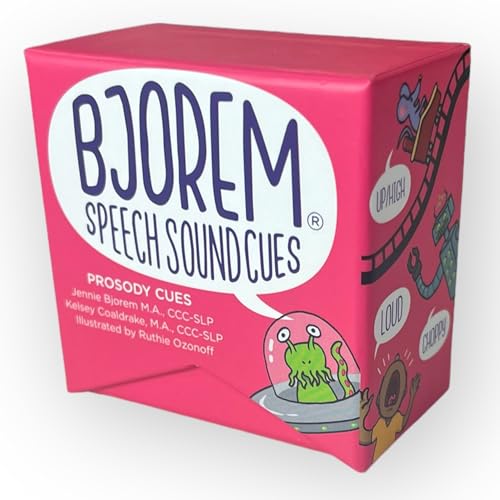
- Focuses on stress, tone, and rhythm in speech.
- Includes engaging visuals for easier teaching.
- Built for therapy, classroom, or home use.
Best For: Children working on prosody and clearer speech flow.
Bilingual Basics
Ceiba Tree Spanish Flash Cards

- 100 English-to-Spanish cards across common categories.
- Compact, travel-friendly size for practice anywhere.
- Clear fonts and rounded edges aid readability.
Best For: Bilingual beginners and everyday vocabulary practice.
Word Building
Bjorem Speech Multisyllabic Words Deck
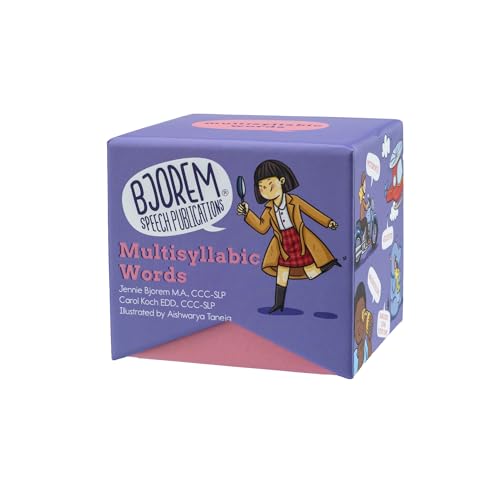
- Targets two- to six-syllable word practice.
- Color-coded system shows syllable count fast.
- Includes 281 target words across 78 cards.
Best For: Multisyllabic word practice in speech therapy.
Sight Word Sentence Builder

- 80 high-frequency sight words with sentence practice
- Visuals, tracing, and writing on laminated cards
- Reusable, large-format cards for home or therapy
Best For: Early readers needing reusable sight-word practice
Action Verb Photo Set
50 Realistic Verbs for Speech Practice

- 50 photo-based action verbs for language work
- Trusted by SLPs, teachers, and therapists
- Durable, water-resistant cardstock cards
Best For: Speech therapy and vocabulary practice with realistic photos
Picture Play Noun Cards
150 Durable Cards with Activities

- 150 realistic photo cards for noun practice
- Double-sided picture and sight-word learning
- Includes four guided learning activities
Best For: Toddlers and preschoolers needing durable noun practice
Speech Cue Cards – Bjorem Speech 2nd Edition Sound Cues
If you’re shopping for childhood apraxia flashcards, this set stands out for its visual, research-based approach to speech sound practice. The Bjorem Speech 2nd Edition Sound Cues give children clear sound symbols, colorful illustrations, and back-of-card cue tips that can support therapy, literacy, and early sound learning.
Best For: Children 18 months and up who need visual support for apraxia, speech sound development, or early literacy practice.
Pros:
- Includes 28 consonants, 17 vowels, plus short and long vowel group cards.
- Color illustrations and detailed cue tips help reinforce learning and retention.
- Developed by certified speech pathologists and designed to be parent-friendly.
- Works in speech therapy, play-based learning, reading programs, or drill work.
Cons:
- Focused on cueing sounds, so it is not a broad vocabulary flashcard set.
- Small sound-card format may be less useful for general picture naming activities.
This is a strong option if your goal is a speech-centered tool rather than a general learning deck. For families and therapists targeting childhood apraxia flashcards, the biggest value here is the clear visual cueing system and the flexibility to use it across different practice settings.
Bilingual Vocabulary Deck – 100 First Spanish Words Flash Cards with Audio
These childhood apraxia flashcards are not apraxia-specific, but they can still be useful if you want simple picture cards for early language practice and repetition. The set focuses on 100 first Spanish words with online audio, giving kids a straightforward way to hear pronunciation and connect pictures to spoken words.
Best For: Toddlers and preschoolers learning beginner vocabulary with picture-based practice and audio support.
Pros:
- Includes 100 beginner words across colors, shapes, numbers, animals, family, food, and more.
- Online audio lets children hear pronunciation in Spanish or English.
- Picture-first design encourages recognition, recall, and conversation.
- Suitable for home, school, pretend play, and on-the-go review.
Cons:
- Designed for Spanish vocabulary, not specialized apraxia speech cueing.
- No built-in speech therapy or motor-speech features.
For families looking for general flashcards rather than therapy-specific materials, this set offers a simple and engaging option. It’s best viewed as a vocabulary builder that may support language practice, not as a dedicated childhood apraxia tool.
Clinical Therapy Cards – Apraxia of Speech Stimulus Library Basic Card Set 1
For users searching for childhood apraxia flashcards with a more clinical feel, this stimulus library is built specifically for therapy work. The Basic Card Set 1 includes a large range of structured practice cards, a manual, and data sheets, making it a practical choice for repetitive speech work and session planning.
Best For: Speech-language pathologists and caregivers who want structured apraxia practice materials with strong therapy support.
Pros:
- Contains 250 cards covering VC, CV, CVC words, blends, compound words, multisyllabic words, and phrases.
- Includes a 99-page manual, data collection sheets, and a storage box.
- Designed to help clients with apraxia, as well as aphasia and dysarthria.
- Offers flexible, detailed stimulus categories for therapy sessions.
Cons:
- More clinical than playful, so it may feel less engaging for very young children.
- Best suited to guided therapy rather than independent flashcard review.
This is the most therapy-forward option in the group, especially if you want structured practice rather than general picture cards. For childhood apraxia flashcards, it stands out because it pairs a large stimulus set with documentation tools and a detailed manual.
General Learning Deck – 110 PCS Early Learning Flashcards with Rings
If you’re browsing childhood apraxia flashcards but need a general early-learning deck, this set offers simple picture-and-word practice across common preschool topics. It’s designed to be durable, easy to sort, and engaging for toddlers who benefit from visual repetition and parent-child interaction.
Best For: Preschoolers and toddlers who need a broad early learning card set for vocabulary, recognition, and matching games.
Pros:
- Covers letters, numbers, animals, foods, shapes, colors, body parts, and first words.
- Double-sided cards include a picture plus a word or related prompt.
- Thick cardstock with PET film is made to be durable and tear resistant.
- Comes with four rings for easy sorting and organization.
Cons:
- Not designed specifically for apraxia cueing or speech therapy.
- No audio or clinician guidance included.
This set is a good general-purpose learning option if you want picture cards that support early concepts and simple practice. It can complement speech work, but it is less specialized than true childhood apraxia flashcards.
Prosody Practice – Bjorem Speech Prosody Cues
For families and clinicians looking for childhood apraxia flashcards that go beyond basic word practice, this Bjorem Speech deck focuses on prosody: stress, tone, rhythm, and natural speech flow. The visual cards are designed to make these concepts easier to understand and use in speech therapy, classroom activities, or home practice.
Best For: Speech-language pathologists, parents, and teachers targeting prosody, expressive communication, and clearer speech flow.
Pros:
- Targets speech melody, including rise and fall in tone, stress patterns, and rhythm.
- Uses fun, easy-to-understand images to support learning.
- Works well in therapy sessions, classrooms, or at home.
- Durable cardstock design suited for repeated handling.
Cons:
- Focused on prosody rather than broad vocabulary practice.
- May be more specialized than a general flashcard set.
This is a strong pick if your goal is to support natural-sounding speech and expressive communication with a highly targeted deck. It is especially useful when childhood apraxia flashcards need to reinforce speech flow instead of simple naming alone.
Bilingual Basics – Ceiba Tree Spanish Flash Cards
If you want childhood apraxia flashcards-style support for language learning rather than speech-specific drill work, this 100-card bilingual deck offers a broad set of English-to-Spanish vocabulary practice. It covers categories like alphabet, shapes, body parts, seasons, numbers, months, and colors in a compact format that is easy to use at home or in class.
Best For: Beginners, bilingual learners, and families who want a portable vocabulary deck for everyday practice.
Pros:
- Includes 100 bilingual cards with multiple vocabulary categories.
- Clear fonts and rounded edges support easy use.
- Compact size makes it travel-friendly.
- Works for classrooms, homeschooling, or self-study.
Cons:
- Not designed specifically for speech therapy or apraxia goals.
- Paper construction may be less durable than cardboard decks.
This deck is a practical choice for general language exposure and vocabulary building, but it is less specialized than therapy-focused materials. For shoppers comparing childhood apraxia flashcards, this is better viewed as a bilingual learning tool than a speech treatment deck.
Word Building – Bjorem Speech Multisyllabic Words Deck
For childhood apraxia flashcards that support more advanced speech work, this multisyllabic words deck offers a structured way to practice two- to six-syllable words. The color-coded system helps identify syllable count quickly, and the set includes 281 target words across 78 cards for efficient therapy sessions.
Best For: SLPs, educators, and parents working on multisyllabic words, speech clarity, and phonological processing.
Pros:
- Covers two- to six-syllable words for flexible speech practice.
- Color-coded design helps make syllable counting easier.
- Includes 281 target words for broad therapy coverage.
- Suitable for home, school, or clinical settings.
Cons:
- More specialized for multisyllabic practice than general flashcards.
- May be best suited to users already targeting speech goals.
This deck stands out for organized, functional practice that can fit a wide range of speech therapy needs. If you need childhood apraxia flashcards that move beyond single words and support more complex pronunciation work, this is a strong option.
Sight Word Sentence Builder – 80 Cards for Early Literacy
If you need childhood apraxia flashcards that also support early literacy, this sight-word set takes a practical, low-pressure approach. Each card pairs a high-frequency word with a simple sentence and visual cue, then encourages children to speak, trace, write, and use the word in context.
Best For: Preschoolers, kindergarteners, and early readers who need reusable sight-word practice for speech therapy or homeschool.
Pros:
- Covers 80 key sight words and 80 sentence-building examples.
- Uses simple sentences plus visual images to reinforce memory.
- Reusable laminated surface supports tracing, writing, and easy cleanup.
- Large 8.5″ x 11″ format is easy for kids to handle at home or in class.
Cons:
- Focuses on sight words rather than speech sound practice.
- Bulky size may be less convenient for quick carry-along use.
Overall, this is a strong choice if you want one card set that blends word recognition, handwriting, and sentence practice. It is especially useful when you want repetitive, visual learning materials that fit a speech-therapy-friendly routine.
Action Verb Photo Set – 50 Realistic Verbs for Speech Practice
For childhood apraxia flashcards that emphasize clear vocabulary practice, this action-verb set keeps things concrete with realistic photos and simple verb targets. The cards are designed for speech therapy, homeschooling, and other language-learning routines where visual engagement matters.
Best For: Kids and adults who benefit from realistic action-verb vocabulary cards for speech therapy, ESL, or homeschool use.
Pros:
- Includes 50 action-verb cards with vivid, modern photos.
- Used by speech-language pathologists, occupational therapists, and teachers.
- Thick cardstock with smudge-proof, water-resistant coating for durability.
- Suitable for both kids and adults, including cognitive therapy use.
Cons:
- Smaller set than some broader vocabulary card collections.
- Centers on verbs only, so it is not a full-language flashcard system.
This is a focused, practical option if you want a sturdy verb set that supports repeated language practice. The realistic photo style and therapy-friendly design make it a solid pick for structured sessions.
Picture Play Noun Cards – 150 Durable Cards with Activities
If you’re shopping for childhood apraxia flashcards with a broader noun focus, this picture card set offers a large, durable library of realistic photos. It combines first-word picture identification on one side with sight-word reading on the back, plus included activity ideas to keep practice varied.
Best For: Toddlers and preschoolers who need a durable noun card set for speech practice, picture identification, and early reading.
Pros:
- Large set of 150 real-photo cards covering animals, food, and more.
- Double-sided format supports picture naming and sight-word reading.
- Includes a guide with four learning activities for structured play.
- Small 3″ x 3″ size is easy for little hands to hold.
Cons:
- Focuses on nouns rather than a wider mix of word types.
- Smaller card size may feel limited if you want larger display cards.
As a durable, expert-designed option, this set works well when you want lots of repetition and flexible play ideas in one package. It is especially appealing for families and professionals who need a sturdy card set that can grow with a child.
How We Picked the Best Childhood Apraxia Flashcards
We prioritized cards that support clear speech practice, repeated exposure, and easy use across home, school, and therapy settings. For Childhood Apraxia Flashcards, the most useful sets tend to offer strong visuals, careful word selection, and a format that makes practice predictable and low-pressure.
We also looked for flexibility. The strongest options can be used for imitation, naming, sentence building, sound cueing, or vocabulary expansion, so they stay useful as a child’s needs change.
Quick Comparison: Which Type Fits Which Goal?
Not every set serves the same purpose. Some are best for early sound shaping and motor planning cues, while others work better for vocabulary practice, literacy, or carryover into everyday language. A child who needs help with articulation patterns may benefit from cue-based cards, while a child who is ready for more functional language may do better with noun, verb, or sight word decks.
Best for Structured Speech Cueing
Look for cards with visual prompts, phonetic cues, or multisyllabic practice targets.
Best for Language Expansion
Noun, verb, and early vocabulary cards can help build more usable words and phrases.
Best for Broader Learning Support
Mixed early learning or bilingual sets may be useful when you want speech practice to connect with classroom or home learning.
Key Buying Factors for Childhood Apraxia Flashcards
Clarity of visuals: Simple, realistic, easy-to-read images reduce confusion and help keep attention on the target word.
Word complexity: Start with easier targets and move toward multisyllabic words, phrases, and functional vocabulary as accuracy improves.
Cue support: Some children benefit from phonetic, prosody, or sound cues that make movement patterns easier to model and repeat.
Durability and handling: Thick cards, rounded corners, and manageable sizes matter if you’ll use them often in therapy or at home.
Versatility: The best Childhood Apraxia Flashcards can be used for imitation, practice drills, naming, sorting, and short play-based activities.
Who Should Buy Which Childhood Apraxia Flashcards?
Parents working at home: Choose cards with simple visuals and familiar words that make short, consistent practice easy.
Speech-language pathologists: Cue-based and multisyllabic decks are especially helpful for targeted intervention and progression planning.
Teachers and homeschoolers: Vocabulary, sight word, and early learning flashcards can support both speech goals and general academic skills.
Children needing bilingual support: Spanish and bilingual cards may be a good fit when language exposure needs to match the child’s home environment.
When choosing Childhood Apraxia Flashcards, the best option is the one that matches the child’s current speech level, keeps practice consistent, and supports success with small, repeatable steps.