The best crash pads for teens provide a soft, reliable landing zone for jumping, movement breaks, sensory input, and relaxed lounging. The right choice depends on more than surface softness: dimensions, foam construction, cover durability, and available floor space all matter.
These 10 options include compact mats, larger landing pads, washable designs, and convertible styles. Use the buying guide below to narrow the list based on safety, maintenance, comfort, and how the pad will be used.
Best 10 Crash Pads for Teens Picks for 2026
Enhanced-Protection Pick

- Built-in 5cm EPE safety layer
- Small EPE pellets absorb impact
- Washable, water-resistant nylon cover
Best For: Teen sensory rooms and active therapy spaces
Roomy Multi-Use Pick
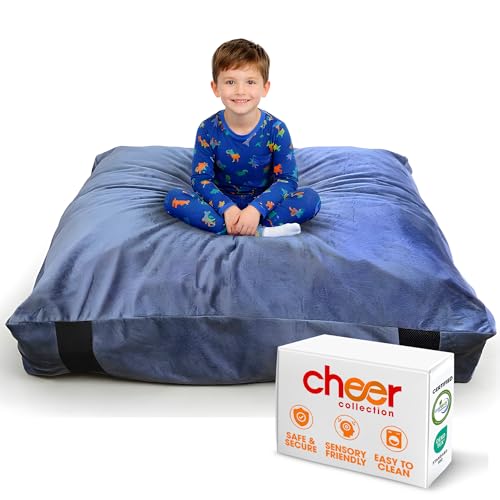
- Spacious 4 x 4-foot landing area
- High-density foam cushions impact
- Also works as a lounge spot
Best For: Large indoor sensory rooms and shared spaces
Compact Durable Pick

- Compact 3 x 4-foot footprint
- High-density foam helps absorb impact
- Concealed zipper and washable nylon cover
Best For: Small bedrooms and dedicated personal crash zones
Everyday Value Pick
- Soft high-density foam filling
- Four mesh vents support gentle air release
- Washable cover for easier cleanup
Best For: Indoor home sensory play and quiet-time use
Best All-Around Crash Pad
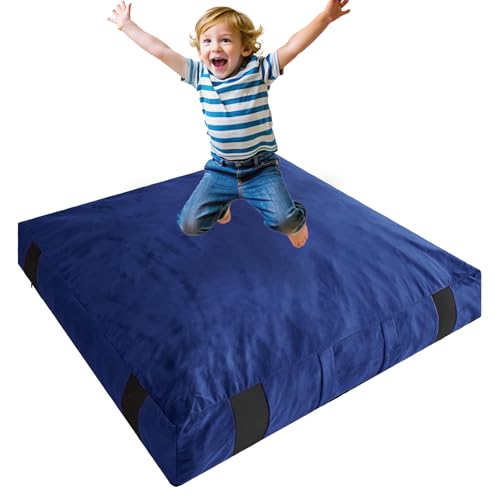
- Shredded foam cushions active landings
- Four handles and a non-slip bottom
- Machine-washable removable cover
Best For: Versatile play, sensory activities, and relaxation
Best for Sensory Support

- High-density foam absorbs impact
- Four mesh ports support airflow
- Suitable for therapy and active play
Best For: Sensory activities, gross-motor play, and therapy spaces
Best 2-in-1 Design

- Functions as a crash mat and bean bag
- Shredded foam cushions and conforms
- Machine-washable removable cover
Best For: Jumping, lounging, and relaxation in compact spaces
Best Compact Teen Crash Pad
SaferBounce 4 x 3 Ft Sensory Crash Pad

- High-density foam for soft landings
- Machine-washable removable cover
- Works for play, school, or therapy
Best For: Teens needing a compact pad for active play and sensory relaxation
Best Large Teen Crash Pad
VEVOR 5 x 4.5 Ft Foam Landing Zone

- Thick 7.9-inch high-density foam
- Large surface for active landings
- Non-slip base and washable cover
Best For: Active teens needing generous cushioning for gymnastics or trampoline play
Best Mini Teen Crash Pad
SaferBounce 3 x 3 Ft Sensory Mat
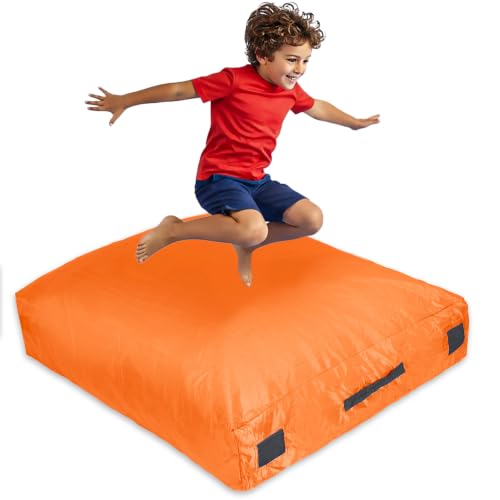
- Space-saving 3 x 3-foot design
- Supports jumping, rolling, and relaxing
- Removable machine-washable cover
Best For: Teens needing a compact sensory or relaxation pad
Enhanced-Protection Pick – EPE Crash Sensory Pad
For shoppers comparing crash pads for teens, this GYMMALL model stands out for its built-in 5cm EPE mat and small EPE pellet filling. The combination is designed to absorb impact during supervised jumping, crashing, and sensory activities, while the removable washable cover simplifies cleanup.
Best For: Teen sensory rooms, therapy spaces, classrooms, and active home play areas where added landing protection and a larger crash surface are priorities.
Pros:
- Built-in 5cm EPE layer adds a dedicated safety layer.
- Small EPE pellets and high-density foam support impact absorption.
- Water-resistant nylon cover has reinforced seams and a machine-washable design.
- Mesh ventilation ports and a secure zipper help with airflow and containment.
Cons:
- At approximately 8.98 kg, it may be cumbersome to move frequently.
- The supplied dimensions list thickness only, so confirm the exact footprint before ordering.
This is a strong option when safety-focused construction and sensory functionality matter more than portability. Its washable cover and durable outer shell also make it practical for recurring use.
Roomy Multi-Use Pick – 4 x 4-Foot Crash Landing Pad
This 4 x 4-foot Cheer Collection pad is a practical choice among crash pads for teens when you want room for active play plus lounging. Its plush, high-density foam filling cushions landings, while the oversized format can also serve as a reading or relaxation spot.
Best For: Larger indoor sensory rooms and shared spaces where teens may want a crash zone that also works as a lounge surface.
Pros:
- Generous 4 x 4-foot size provides a spacious landing area.
- High-density foam pieces offer a soft yet supportive surface.
- Mesh vents allow air release during jumping.
- Removable machine-washable cover and secure zippered lining simplify maintenance.
Cons:
- The larger footprint requires more floor space than a compact pad.
- Designed for indoor use according to the supplied details.
Choose this model if versatility is important: it supports active movement while doubling as a comfortable spot for reading or relaxing. It is less suited to homes with limited open floor area.
Compact Durable Pick – Skil-Care Nylon Crash Pad
For crash pads for teens in tighter rooms, the Skil-Care model offers a compact 3 x 4-foot footprint with high-density foam sections. Its water-resistant nylon cover, mesh vents, and concealed TamperShield zipper are useful features for supervised active play and routine maintenance.
Best For: Bedrooms, corners, and smaller sensory areas where one teen needs a personal crash zone without a bulky footprint.
Pros:
- Compact 3 x 4-foot size fits smaller spaces.
- High-density foam sections are designed to absorb impact and hold shape.
- Water-resistant nylon cover wipes clean and is machine washable below 180°F.
- Concealed zipper helps deter access to the foam interior.
Cons:
- Its compact size is intended for one child at a time.
- The foam interior should not be laundered; only the cover is machine washable.
- Mesh vents must remain unobstructed during use.
This is a sensible space-saving choice with a durable cover and clear care instructions. It works best when the pad will stay in a designated area and be used under supervision.
Everyday Value Pick – 3 x 4-Foot Crash Landing Pad
This 3 x 4-foot crash landing pad is a straightforward option for shoppers seeking crash pads for teens for indoor active play and quiet time. Plush, high-density foam pieces cushion landings, and four mesh vents support a slower bounce while the removable cover can be machine washed.
Best For: Indoor home use, sensory play, and flexible spaces where the pad may be used for jumping, reading, relaxing, or supervised therapy activities.
Pros:
- 3 x 4-foot size balances usable space with a smaller footprint.
- High-density foam provides a soft, supportive surface.
- Four mesh vents help release air during jumps.
- Removable washable cover and secure inner lining support easier cleanup.
Cons:
- Listed for indoor use only.
- The supplied details describe it as a small model, so it may be less suitable for multiple users.
- Recommended for ages 3 and up, with supervision still appropriate for active use.
This model offers a practical balance of cushioning, cleaning convenience, and room flexibility. It is a good fit when you want one pad for both movement and relaxation without choosing the larger 4 x 4-foot format.
Best All-Around Crash Pad – JOYWOO Sensory Crash Mat
For families comparing crash pads for teens, the JOYWOO Sensory Crash Mat offers a roomy landing and lounging area for active indoor play. Its shredded-foam filling, breathable mesh panel, reinforced handles, and non-slip bottom support jumping, sensory activities, and calmer downtime.
Best For: Teens and families wanting a versatile crash mat for playrooms, classrooms, reading, and relaxation.
Pros:
- Soft shredded-foam filling cushions jumping and landing.
- Four reinforced handles make it easier to move.
- Removable microfiber cover is machine washable.
- Non-slip bottom helps keep the mat steady during use.
Cons:
- The 4-by-4-foot version may offer less landing space than the larger option.
- Its substantial package weight may make frequent carrying less convenient.
With support for active play and quiet use, this is a practical choice when you want one crash pad to serve several purposes. Choose the available size based on your room and the amount of landing space needed.
Best for Sensory Support – WOUDY Soft Foam Crash Mat
Among crash pads for teens, the WOUDY Soft Foam Crash Mat focuses on pressure reduction, shock absorption, and sensory input. Its high-density polyurethane foam and four mesh ventilation ports make it suited to jumping, landing, therapy activities, and quiet floor use.
Best For: Teens who need a crash pad for sensory play, gross-motor activities, classrooms, or therapy rooms.
Pros:
- High-density foam provides support during jumping and landing.
- Designed to encourage balance, coordination, and full-body movement.
- Four mesh ventilation ports promote airflow during sensory play.
- Can also serve as a soft surface for reading and relaxation.
Cons:
- The supplied notes do not specify handles for carrying.
- Its listed size is less clearly presented than the dimensions of some competing mats.
This model is a focused option for buyers prioritizing sensory and developmental use over a general-purpose lounging design. Its foam construction and ventilation features support repeated active use, while the soft surface remains useful during calmer activities.
Best 2-in-1 Design – MABOZOO Crash Pad Bean Bag
The MABOZOO combines a crash pad and bean bag-style lounging space, making it an appealing choice for shoppers seeking crash pads for teens that work beyond jumping activities. Shredded foam cushions landings and adapts to the body for resting, while the corduroy cover adds a soft, textured feel.
Best For: Teens who want one piece of furniture for jumping, lounging, relaxation, and everyday room use.
Pros:
- Two-in-one design supports active play and quiet lounging.
- Shredded foam absorbs impact and molds comfortably during rest.
- Removable, machine-washable cover simplifies cleanup.
- Lightweight design is intended for bedrooms, playrooms, living rooms, and nooks.
Cons:
- The compressed package needs beating and shaking and may take up to 48 hours to regain its form.
- The corduroy surface may require more care than a smoother fabric.
If space is limited, this design can replace the need for separate crash and lounging furniture. Allow time for expansion after delivery, then use it as a flexible landing pad or cozy bean-bag-style retreat.
Best Compact Teen Crash Pad – SaferBounce 4 x 3 Ft Sensory Crash Pad
For shoppers comparing crash pads for teens, this SaferBounce model offers a compact landing and lounging space for jumping, tumbling, sensory play, or relaxing. Its high-density foam and removable, machine-washable cover make it practical for home, school, and therapy settings.
Best For: Teens who need a smaller crash pad for active play, sensory exploration, or calm-down time.
Pros:
- Supports jumping, rolling, tumbling, and crashing.
- High-density foam provides a soft yet supportive landing surface.
- Removable cover is machine washable.
- Suitable for playrooms, classrooms, and therapy spaces.
Cons:
- The listed 4 x 3-foot size provides less landing area than larger models.
- The supplied details do not specify the foam density or thickness.
This is a flexible choice when space and easy cleaning matter more than maximum coverage. Its smaller footprint can work well for teens using the pad for focused sensory or recreational activities.
Best Large Teen Crash Pad – VEVOR 5 x 4.5 Ft Foam Landing Zone
Among crash pads for teens, the VEVOR model stands out for its large landing zone, thick foam, and non-slip base. It is designed for active landings from climbing, trampolines, or gymnastics while also serving as a relaxation or skill-building area.
Best For: Active teens who want a roomy crash pad for gymnastics, tumbling, trampoline landings, or calm time.
Pros:
- Large 70.9 x 47.6-inch surface with 7.9-inch thickness.
- 35D high-density foam is designed to absorb impact.
- Non-slip base helps keep the pad stable on various floors.
- OEKO-TEX chenille cover is removable and machine washable.
Cons:
- At 35.9 pounds, it is relatively heavy to move.
- The larger footprint requires more storage and floor space.
- Its gray finish may show dirt from frequent active use.
This is the strongest option here for teens who need broad coverage and substantial cushioning. The weight may limit portability, but the thick construction and non-slip base are useful for regular indoor activity.
Best Mini Teen Crash Pad – SaferBounce 3 x 3 Ft Sensory Mat
If you are looking for crash pads for teens in a small room or dedicated sensory area, this 3 x 3-foot SaferBounce model is easy to position. It provides a soft foam surface for jumping, rolling, crashing, or relaxing, with a removable cover for simpler upkeep.
Best For: Teens who need a mini crash pad for compact spaces, sensory breaks, or light indoor play.
Pros:
- Compact 3 x 3-foot design suits smaller spaces.
- High-density foam supports active play and resting.
- Machine-washable removable cover helps with routine cleaning.
- Usable in homes, classrooms, playrooms, and therapy spaces.
Cons:
- The mini size offers less landing coverage for larger movements.
- The supplied details do not list foam thickness or density.
- It may be less suitable for teens seeking a full gymnastics landing zone.
This model makes the most sense when a small footprint is the priority. It can provide a dedicated sensory or relaxation surface, though teens performing bigger jumps may benefit from a larger pad.
How We Picked the Best Crash Pads for Teens
We focused on features that matter in active home and sensory-room use: overall dimensions, foam density, landing-surface coverage, cover materials, cleaning convenience, portability, and versatility. We also considered whether each pad is better suited to jumping, supervised movement activities, lounging, or smaller rooms.
Because crash pads are not a substitute for professional therapy equipment or active supervision, buyers should match the pad to the teen’s size, movement style, and the height and intensity of the activities involved.
Quick Comparison
| Best For | Look For | Why It Matters |
|---|---|---|
| Large landing area | 5-by-5-foot dimensions | Provides more coverage for active movement and varied landing positions. |
| Smaller rooms | 3-by-3 or 3-by-4-foot formats | Uses less floor space and is easier to store. |
| Frequent cleaning | Removable, washable cover | Makes it easier to manage sweat, spills, and everyday messes. |
| Firm impact support | High-density EPE or foam filling | Can offer more consistent cushioning than loosely filled alternatives. |
| Lounging and sensory breaks | Bean-bag or convertible construction | Adds seating and relaxation value beyond landing practice. |
Key Buying Factors for Crash Pads for Teens
Size and Floor Coverage
Measure the intended area before ordering, including clearance around the pad. Larger Crash Pads for Teens generally offer more forgiving coverage, while smaller models are easier to move and store. If the pad will be used near furniture, walls, or exercise equipment, leave enough open space to reduce collision risks.
Foam Construction and Firmness
Look for clearly stated foam details, such as high-density foam or EPE blocks. A pad should compress enough to cushion landings without flattening immediately. Very soft filling may feel comfortable for lounging but may not provide the same support for repeated movement activities.
Cover, Seams, and Cleaning
A washable or removable cover is especially useful for teens who use the pad frequently. Check the closure, stitching, handles, and cover fabric. A textured or non-slip underside can help the pad stay positioned, although placement on a clear, level floor remains important.
Safety and Supervision
Use the pad on a stable surface and inspect it regularly for torn covers, exposed foam, shifting inserts, or flattened areas. Follow the manufacturer’s age, weight, and use recommendations. Avoid using a crash pad for unsupervised high-risk jumping, flips, or elevated launches.
Who Should Buy Which Crash Pads for Teens?
Choose a Large 5-By-5-Foot Pad If…
You have sufficient floor space and want broad coverage for jumping, movement breaks, or multiple landing positions. Larger formats are typically the better choice for active teens who need more room to move.
Choose a 3-By-3 or 3-By-4-Foot Pad If…
You are furnishing a bedroom, therapy corner, or compact sensory area. These sizes are easier to reposition and can work well for calmer activities or targeted landing practice.
Choose a Convertible or Lounging Design If…
The pad will serve as both sensory equipment and everyday seating. Convertible models can be useful in shared rooms, but confirm that the shape and filling still provide suitable cushioning for the intended activities.